Showing posts with label homeschool reflections. Show all posts

Tuesday, April 22, 2014


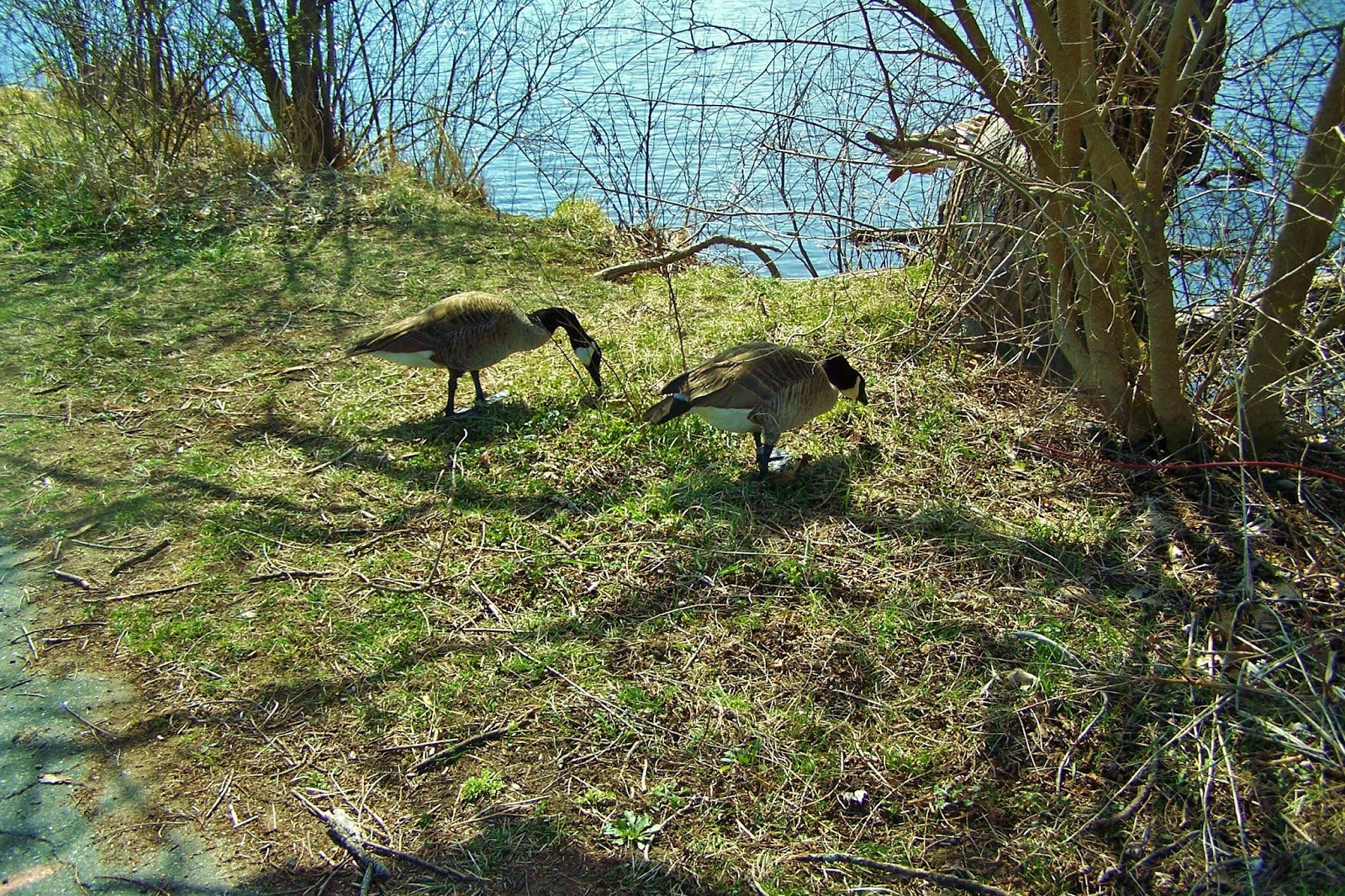
The past few days have been bright and warm. The trees are, at last, waking up. Chartreuse halos light up the willows all along the edge of the pond. After morning lessons, we go to the woods to play and marvel at each new sign of spring: duck and geese couples, clusters of delicate wood violets, turtles basking on logs, willow and hazel catkins. It is my favorite place to be. ♥

I am teaching Amy how to drive. She is my third driving student. : ) Every day we go out and practice a little bit. So far so good.

I often think about education, what it is and how to pursue it. In Married to Tolstoy I learned that:
Both parents gave the children lessons. Until special teachers were engaged for French, German, music, and Russian literature, Sonya taught all these subjects and dancing as well; Tolstoy arithmetic and, later, Greek. 
Sonya herself had been educated at home:
She loved literature, wrote short stories, showed talent for painting and music, and at sixteen passed a university examination that gave her a diploma as a teacher. Her essay was declared the best of the year. It was remembered, too, for hearing of her engagement (at eighteen), the professor wrote to Tolstoy: 'This is just the wife for you. She has a great flair for literature.'
Indeed, besides bearing him thirteen children in twenty-six years, Sonya acted as her husband's secretary, copying out miles and miles of his manuscripts; in the case of War and Peace, seven drafts. (It is interesting to me that Robert Louis Stevenson's wife acted as his amanuensis, too.)

But, this is what I love most about the Tolstoy's married life (which here, again, is similar to the Stevensons'):
When at last the children had been put to bed, and the manuscript on which Sonya was working laid aside, husband and wife would side down to the piano and play duets far into the night, or read aloud some favourite book. Tolstoy gave Sonya her early lessons in English. He wanted her to be able to read Dickens, for many years his favourite writer, but the first book they read together was The Woman in White, by Wilkie Collins.
Now, that struck me as coincidental, since I, too, read The Woman in White last fall, just before I caught the Tolstoy bug. Somehow, I have never read anything by Charles Dickens. He keeps coming up for me as of late, so I am going to pursue him next. However, I won't be reading aloud with my husband. He would only fall asleep. ; )

Monday, January 6, 2014

The snow is gone! When I woke it was 57°F outside and raining. Fog lay thick upon the ground, rising off the rapidly melting snow like dry ice vapor. Eerie. That was this morning. Now the temperature is falling fast. It will be in the teens tonight and I will be wrapped in flannel and working on the first sleeve of my cardi.

Today was our first day back to lessons. I think my children and I have been missing the steady productivity of our learning routine. Even though I spent most of the day on the phone arguing with a customer service department, it was still a good day. Hooray for books, paper, pens, music, plants, birds, maps, and Brussels sprouts!

Easy Brussels Sprouts

4 cups fresh Brussels Sprouts
1-2 cloves garlic, minced
1/4 cup onion, minced
3 tablespoons butter (or a splash of olive oil)

Boil or steam sprouts for 3 to 5 minutes (tender-firm). Drain. Sautee garlic and onions in butter over medium heat. Add Brussels Sprouts and sautee for 2-3 minutes.

Saturday, October 19, 2013

What I Saw On My Walk Today

There was an angel in the woods praying under a tree. And, a man smoking a pipe and walking a white cat on a purple leash across the dike. You don't need to look far to find wondrous things.

Sarah has written two excellent posts about homeschooling. They made me think about my own experience home educating my children all these years. Seth will be twenty-one in a few weeks. He is in the top 1% of his class in college. My son Zach has worked and volunteered for years, and at eighteen is just beginning to pursue higher education. My other three children are still under my tutelage. Homeschooling has been the most natural thing to do--as natural as nurturing them for the first five years of their lives. Every year has just been a continuation of that. No special knowledge was ever needed. The first thing most people say when they find out that I home educate my children is, "Wow, I could never do that!" But, they could; they really could, because it hasn't been hard (neither has it been easy!). It has just been living and learning together like always.

Thursday, September 12, 2013

Next Week

September roses from my garden.
"Indiana Jones" getting a drink from the kitchen sink.
Our first day back to lessons required abandoning all plans to follow my littlest's interest, which currently is bears. He woke up that morning crying that he hates "school" and "why can't it still be summer?" So, I gathered all of the field guides and books on the topic I could find and we sat on the couch and read about black bears, brown bears, polar bears, Asiatic honey bears, spectacled bears, panda bears. He colored a bear picture. We did some letter and number work. Then we made slime in the kitchen, which was a big hit. Somehow, despite an unhappy start, we managed to get all of our lesson work done. However, that evening the stomach virus hit: first Amy, then Emmeline and me the next night. Two full days of it in the midst of a late summer heatwave with temps over 90°. That put an end to our lessons and our first week back to "school".

We're all feeling a lot better today, but taking it easy. Tomorrow, we plan to drive up to the beach with the dogs. It's supposed to be cooler by then. It will be fun to climb on the rocks, explore the tide pools, and hunt for shells and beach glass. I love the sparkling sand, the grassy dunes, the roar and crash of the waves and the endless blue.

We'll have another go at lessons again next week. ♥

Saturday, August 17, 2013

Homeschool Reflection No. 11 | Not Back To School

Great blue heron
I cannot say I have a favorite season. Each one holds such beauty and wonder where I live, that I have great affection for them all. But, I am especially enjoying these late summer days stirred by the first breaths of autumn.

In two weeks we'll begin lessons again in our little home "school". I was thinking this morning about learning disabilities and how so many children have special learning needs these days.

Great blue heron roosting
Are today's children so different from children of yesteryear? I don't think so. But what is demanded of children has changed a great deal. I wonder if we are limiting their learning potential by focusing too much and too early on literacy, numeracy--book learning. Should little children be looking at symbols on a page or ants on the sidewalk? It is easy to say, "Both!", but less easy to give them the time to do it. This article stands as my all-time favorite on the subject of learning and curriculum (note the year: 1929!).

"Edna" 8 mos. old~exploring the pond
Keeping that article's principles in mind, when we get back to lessons next month there will be a lot of walks in the woods and on the beach, a lot of trips to museums and interesting places, a lot of making and doing. There will also be stories and articles to share and read and maps to pour over. These are the things that make up our curriculum. We make a practice of recording our adventures, experiences and impressions in words and illustrations. We enjoy many and deep conversations. Math is our servant, applied when we need it to make sense of the world or solve a problem while cooking, knitting, buying and selling, woodworking, gardening, writing music, planning a trip, etc. 

We have never followed a systematic, graded, artificial scope and sequence, opting instead to make room for memorable real-life learning that will expand our minds and hearts. ♥ 

In other words in two weeks, we will be going not back to school : )

This post has been edited slightly for clarity. 

Friday, August 2, 2013

Homeschool Reflection No. 10 | For The Children's Sake

My grandmother liked to fish. She would let you come along, show you how to bait your hook, how to cast, how to feel the bite, set the hook and remove it from the fish's mouth if you caught one. But, she would only show you how to do these things once. Then you were on your own, because she was fishing. Of course, sometimes you needed a little more help, and she would give it, grudgingly. You tried harder to do it by yourself after that. Gram proved that learning to fish was worth it, that it was something grown-ups wanted to do, that it was fun for them. (Gram also taught me how to knit).

My mother has always sewed and baked and made all sorts of wonderful things: stuffed elephants, chickens, puppies, kitties, dolls and doll clothes. She made most of these items for church, to raise money for the poor. She grew up on a dairy farm and knows the names of wildflowers and birds. When I was growing up, she always, always sang in the kitchen while she worked. She visited the bookmobile when it made its rounds to our neighborhood, because she loves to read.

Guess what I learned? Guess where I learned it? 

When I was little I saw my mother sewing and wanted to do it too, so she gave me scraps of fabric and showed me how to thread a needle. She taught me some basic stitches and left me on my own, because she was sewing. I learned to try hard, to be patient and to do things carefully.

If there were children's crafts items when I was a kid, my parents couldn't afford them, and I didn't know about them. Everything I made was from real materials.The grown-ups in my life invited me to try what they were doing, so long as I didn't bother them too much and ruin their own fun.

It's different today. Everything we do is for the kids. We lament their childhood when it passes, because we no longer do the things we once did together. We no longer make things, because really, it was only something we did to entertain them. We no longer sing, because we only sang for them. We no longer visit places, because we only went there so they could see, not because we wanted to see. We make such a special effort for our children today, but do we invite them into our lives? Do they get a chance to really know us, to learn what we are about and what we love?

Tuesday, February 19, 2013

Homeschool Reflection No. 9 | Will Power

A flock of robins came through my backyard this morning--the first I've seen. And, it was warmer today, about 45 F.  When I was out with the pups I heard the sweet strains of spring song and saw chickadees, sparrows, tufted titmice, and a male cardinal. It lifted my heart. <3

Over the weekend I spent some time thinking about education and home learning. I have always had a lot of anxiety about whether the things I do at home with my children will result in educated people.

I know that a lot of home schoolers these days call themselves unschoolers--a very ambiguous term that can mean anything (and so to me, means nothing). However, back in the mid-nineties when I began home schooling my children, the term had a more definite meaning, typically a rejection of planned curricula and direct instruction. Under that definition, I decided not to unschool my children. As a parent, I felt a responsibility to fill my children's days with good things in a steady, predictable manner that would help them learn to control their wills.

In considering what it means to be an educated person, we often think in terms of college degrees and literacy: someone who keeps abreast of politics and current affairs, who is well-read, has sharp writing skills, and speaks more than one language. Sounds pretty good. But, what if this same person flies into a rage every time things don't go her way? What if she is unreliable? Dishonest? Impatient? Envious of others to the point of contempt?

The American poet Robert Frost said, "Education is the ability to listen to almost anything without losing your temper or your self-confidence."

If he's right, then the educated person possesses first and foremost control over her own will.

I want my own children to grow to be wise, empathetic, creative, and engaged, and to be masters of their bodies and minds. In a society where the most frequently used drugs by 18 to 44 year olds are antidepressants, and with teen suicide on the rise, learning to govern the will may be the most important thing I can teach them.

I am still enjoying Dale Carnegie's book How To Win Friends and Influence People which is just as relevant today as it was when it was first published in 1936. I liked this passage which touches on the benefit of controlling the will:
Act as if you were already happy, and that will tend to make you happy. Here is the way the psychologist and philosopher William James put it:

"Action seems to follow feeling, but really action and feeling go together; and by regulating action, which is under the more direct control of the will, we can indirectly regulate the feeling, which is not.

"Thus the sovereign voluntary path to cheerfulness, if our cheerfulness be lost, is to sit up cheerfully and to act and speak as if cheerfulness were already there..."

Everybody in the world is seeking happiness--and there is one sure way to find it. That is by controlling your thoughts. Happiness doesn't depend on outward conditions. It depends on inner conditions.

It isn't what you have or who you are or where you are or what you are doing that makes you happy or unhappy. It is what you think about it. For example, two people may be in the same place, doing the same thing; both may have about an equal amount of money and prestige--and yet one may be miserable and the other happy. Why? Because of a different mental attitude. I have seen just as many happy faces among the poor peasants toiling with their primitive tools in the devastating heat of the tropics as I have seen in air-conditioned offices in New York, Chicago or Los Angeles.
"There is nothing either good or bad," said Shakespeare, "but thinking makes it so."

Abe Lincoln once remarked that "most folks are about as happy as they make up their minds to be." (pp. 99-100)
Here are my puppies Elvis and Edna enjoying a nap in the winter sunshine.  :  )


Friday, December 7, 2012

Homeschool Reflection No. 8 | Fabulous Fridays

For years now I have kept a four day homeschool week with my children. We reserve Fridays for outings, special projects, and fun. Sometimes I think that more learning occurs on Friday than all of the other days combined!  (Still, I know that one of the most important things I can impart to my children is discipline, and those four days of lessons and study are absolutely essential to that end.)

This Friday was:


Tea and prayer in the morning, followed by the Globe crossword.


Admiring the Christmas decorations around Boston as we drove to the Museum of Fine Arts. 


Walking up the marble steps to the fresco adorned Rotunda of the MFA, which always fills we with wonder. Some of my favorite pieces from this visit to the Museum were this Eucharistic dove:


(for reserves of the Eucharistic host). France (Limoges) 1200-50 AD. Enamel and gilding on copper.


This detail from a small tempera painted panel: The Nativity and the Annunciation to the Shepherds, by Bernardo Daddi 1336 Italian (Florence).


Snow at Argenteuil, by Claude Monet about 1875. Oil on canvas.

In the afternoon, after the Museum there was cookie baking:


Then we piled into the car and went to see the Christmas goats. We brought them a treat of cracked corn:


...and walked among rows and rows of dark and spicy Christmas trees:


And then, we went inside the Nursery Center to gaze in delight at the beautiful Christmas village display. Luke said, "It's like a little world":


It was a fabulous Friday!

Thursday, November 15, 2012

Homeschool Reflection No. 7 :: Morning Circle

There is the Music of Heaven in all things and we have forgotten how to hear it until we sing.
                                                                             ~St. Hildegard von Bingen, Doctor of the Church

Here is how our day begins:  after breakfast my children and I gather together to pray, read aloud from Scripture, and sing. I have come to see our "morning circle" as the most important part of our day. We can skip history, or even (gasp!) math, but not this. This is what puts our hearts right. It is what connects us to each other and to Heaven.
St. Hildegard believed that many times a day, we fall out of sorts, lose our way or find ourselves off center. Music was the sacred technology which could best tune humanity, redirect our hearts toward heaven and put our feet back onto the wholesome pathways of God...In singing and playing music, we integrate mind, heart and body, heal discord between us, and celebrate heavenly harmony here on earth. St. Hildegard, who is one of only four women to be declared a Doctor of the Church, believed that music is the highest form of praise to God. When singing, we exhibit the spiritual field of unity for which we all yearn. In St. Hildegard's writings, she mentions music over three hundred times to illuminate spiritual truths. (Gleaned from the webpage:  Hildegard of Bingen: Symphony of the Harmony of Heaven.)
In my mind, the only element that is essential for a morning circle is singing. Singing lifts up our hearts more than spoken prayer (in the early Church prayer was traditionally sung). It tunes our hearts to God and one another and fills us with joy. If time is short, we can just sing.

Our morning circle is informal and simple. It is a happy time. There is no weight of imposed reverence or quiet. We talk to one another, ask questions, and sing! Here is the pattern that works best for my family (I have five children with a large span of ages from six to twenty years old):

:: We pray the Our Father (the Lord's Prayer)
:: I read aloud a short passage from Scripture
:: We pray Hail Mary and Glory Be
:: We sing, beginning with spiritual songs and finshing with patriotic and children's songs. We sing about eight songs each morning.

That's it. Our circle pattern has changed slightly over the years. When my three oldest children were little I used to include picture book stories at the end of our circle, which would then lead to a hands-on activity afterward. It's not the pattern of the circle that matters, but the coming together, the spirit of joy, and the singing.

Above all, singing together provides grace and courage for the day's journey.

Thursday, November 8, 2012

Homeschool Reflection No. 6 :: Seeking Wholeness

When my first child was about three years old and my second child was almost one, my husband and I began thinking about homeschooling. The year was 1995 and homeschooling was not yet commonplace. We didn't know anyone else who did it.  Our parents and siblings thought that we were crazy. They thought that it wouldn't work. They thought that educating our children at home would hurt them in the long run. Even as I worried, Gosh, what if they're right? I knew in my heart that I had to try.

I had to do it for my children.

Each family chooses to homeschool for its own reasons. It is a careful decision, often made without the support of relatives and friends. My husband and I chose homeschooling because we wanted our children to grow up whole. We wanted to give our children the time and space to gain confidence in themselves, to grow and learn at their own pace in a stable, healthy, nurturing environment surrounded by the people who love them, to allow their true personalities to develop and shine forth without hindrance.

I remember my early school years. I was as shy and sensitive as a kitten. I felt confident only when my mother was near. The world was bright and wonderful when she was there to guide me and scary when she was not.  She would hang clothes in the backyard. I would swing on my swing or dig in the dirt with a spoon or look at the ants or dandelions. She would sew at her sewing machine in the corner of the kitchen, I would play with my dolls in front of the window or sit at my little table and color. In the afternoon we walked to the store through the park. She named the trees: chestnut, oak, maple; and the birds: robin, sparrow, bluejay. Loud sounds frightened and overwhelmed me: a truck going by, a car horn, loud voices at a party or event.

When I turned five it was time for kindergarten. I was afraid and cried for my mother like many little children do. My teachers Miss Sweeney and Mrs.Tisdale were warm and kind. In those days kindergarten meant play, stories, snack, and sharing. There were "stations" in our kindergarten. One was "house" with dress-up clothes, a wooden kitchen, child-sized brooms and dust pans, another was "workshop" with wood, saws, hammers and nails (I'm not kidding). I learned to like kindergarten, but I never felt completely comfortable at school. There was always something missing:  the natural world in my own backyard and neighborhood, and my mother.

First and second grades were disastrous for me. I was an excellent student. I worked hard to do exactly what my teacher expected from me: sit with hands folded and listen; color in the lines; write neatly and carefully. The day was long. The noisy lunchroom filled with classes from multiple grades terrified me. The lunch ladies screamed at the children to be heard above the din of voices. Most days I was so anxious that I could barely eat my lunch.Most of the children were nice, but some were not. In time I developed coping mechanisms to deal with life at school--I changed myself in order to "get along". But, I never felt happy or confident in school. I used to watch the big clock on the wall waiting for the bell to ring, waiting to be released.

By third grade I was: Susan at school and Susie at home. These distinctions became more powerful the older I became. My self at home and my public self were very different. And, I hated it. I hated who I was. I hated the sense of separation from my family and also from my friends. For a long time I felt like no one really knew me. I understood later (when I became an adult) that it was I who did not know myself.

When I became a young mother I wanted a different experience for my children. I looked into alternative schools and noticed something interesting: Montessori, Waldorf, Reggio Emilia, etc. all have one thing in common: they try to mimic a home atmosphere:

A Reggio Emilia Kindergarten @ Overfield Early Childhood Program

A Waldorf Kindergarten (photo found at simplehomeschool.net)
A Montessori Kindergarten (photo from montessorichildrenshouse.com)
The best schools recognize the value of the home environment in nurturing young children (it is interesting to me that some homeschoolers try to mimic a Waldorf or Montessori atmosphere in their home!) . Even so, these schools are still missing the other essential elements that are vital to a child's growth and development:  time and space to explore and just be, plenty of contact with nature, and mother.

Where I live kindergarteners now go to school for the full day. As a young mother I considered all of the time that my children would spend away from me--all of the experiences and interactions they would have that I would not be able to help guide them through.  I thought about my own school experiences and the things that I never told my mother. I knew that these things would effect my children's development for better or for worse, just as they did mine.

At that time, when my children were little, we lived a block away from an elementary school. One day we were at the playground after school let out. On a whim I asked several of the school children, "Would you rather stay home and have your mother teach you or go to school?" Every single child said he would rather be at home with his mother. That gave me a lot to think about.

Nearly twenty years have passed. Now that several of my children are young men and women, I can say with complete confidence that the hope I put into homeschooling was worth it.


Thursday, November 1, 2012

Homeschool Reflection No. 5 :: Modeling and Imitation

What does it mean to be human?  From the moment of birth we begin to answer this question for ourselves. We observe our mother and father, our siblings, and the other people who surround us. We take in their movements, their actions, their speech. And, then we try to imitate these things. We learn by a combination of  observing and practicing.

It is no accident that young children want to do what they see others doing: they want to sweep the floor, play with the toy the other child has, talk on the telephone, tap the buttons on the computer, cook, write, sing, yell...This is how they connect with their species. It is how they work out what it means to be human.

It is no accident that all the young teens in middle school wear the same brand of jeans, the same shoes, the same jackets, jewelry and hairstyles. These young people are not abandoning individualism; they are in the process of learning what it means to be human and thirteen. They are learning by observing and practicing.

Scientists say that we are born without instinct. In order to survive we must learn everything about our world and about ourselves. A boy who was raised by a pack of wolves in the Russian wilderness is more wolf than human. When his young brain was developing it created neural pathways that enabled him to assimilate into the life of the wolf pack. These pathways became "hardwired" so that doctors say he will never recover and live a fully human life. What he has learned has defined who and what he is.

When I took my children out trick or treating last night I saw lots of parents talking on cell phones or staring into small glowing screens. I know that many parents today are very conscientious about not letting their young children have access to electronic media--but, what are they modeling with their own usage of these devices (cell phones, computers, video games, television, e-readers, and tablets)?

As we model the importance of these devices in our lives, what lessons are our children learning about their humanity, especially when we say, "No, you may not do this thing that I do--don't look; don't touch"? (It should be noted that doctors and scientists have stated that these devices are not appropriate for young children and even harmful, but is there an age when they become beneficial or harmless?) 

I have used electronic media as an example, but I think it is important to ask myself what benefit there is in modeling any behavior that I do not want my children to imitate. My questions are:
  • What are my children learning about being human? 
  • What do I want my children to learn about their humanity?
  • How can I begin to model this for my children?
A place to start:
:: Caring for my body: getting enough sleep, proper nutrition, and exercise
:: Connecting: honoring the needs of others, enjoying spending time with people, gentle communication, play
:: Caring for others: housework, service, taking care of the sick
:: Meaningful work/creativity (an essential human activity):  cooking, crafting, writing, music, gardening, art, etc.
:: Establishing a daily rhythm that allows time for everything.What a rhythm might look like for me (I wish that I could display this here as a circle):

: Rise :: Breakfast :: Prayer :: Singing :: Study/Work :: Lunch :: Study/Work :: Chores :: Play :: Rest :: Supper :: Quiet Play :: Sleep:


Thursday, October 25, 2012

Homeschool Reflection No. 4 :: Cultivating Cheerfulness

Wondrous is the strength of cheerfulness, and its power of endurance - the cheerful man will do more in the same time, will do it better, will preserve it longer, than the sad or sullen. ~Thomas Carlyle (19th century Scottish writer, historian, and teacher)
The single factor that can make the greatest difference in our homes is cheerfulness. Cheerfulness is serene, good natured, and smiling. (Roberto Assagioli). It is the gentle spirit that opens the door to joy, creativity, productivity, and understanding. It is a pleasure to be around cheerful people. Their cheer encourages the best in ourselves, despite our circumstances.
I am determined to be cheerful and happy in whatever situation I may find myself. For I have learned that the greater part of our misery or unhappiness is determined not by our circumstance but by our disposition. ~ Martha Washington (First Lady of the United States)
Once upon a time cheerfulness was considered a moral obligation. There was good reason for this: a spirit of cheerfulness promoted a kinder, gentler, more civil society. It also made for a healthier society--one which scorned self-pity and fits of temper:
Cheerfulness is health; its opposite, melancholy, is disease. ~ Thomas C. Haliburton (19th c. Canadian writer).
 Cheerfulness is the best promoter of health, and is as friendly to the mind as to the body. ~Joseph Addison (17th century English statesman and writer)
Sadly, cheerfulness is not a word that we hear much these days. We live in an age characterized by complaint departments, despondency, and dissatisfaction. We are a culture afflicted by spiritual disease. Anti-depressant use has increased in the United States by over 400% since 1988 (more than 1 in 10 people over the age of twelve take anti-depressants in this country--that's over 32 million people who are painfully cheerless). Our character deficits are ruining our lives.

Cheerfulness is not something with which we are born, nor is it something dependent upon circumstance. It is a character trait that must be cultivated and practiced. 
Life is like a blanket too short. You pull it up and your toes rebel, you yank it down and shivers meander about your shoulder; but cheerful folks manage to draw their knees up and pass a very comfortable night. ~Marion Howard (writer).
Children are especially affected by cheerfulness or the lack thereof. One of the best posts I have read on this topic regarding children is, "Surrounding the Young Child With A Christmas Mood", by Carrie at Parenting Passageway. Carrie refers to the article, "Meeting Fear and Finding Joy", by Stephen Spitalny--a fabulous reflection on how children are affected by the emotional atmosphere of their parents. Parents cannot expect their children to be even-keeled and cheerful when they themselves are not.

Roberto Assagioli (an Italian psychologist who pioneered the psychosynthesis movement) wrote an excellent article in which he identified some of the obstacles to cheerfulness: irritation, criticism, self-pity, impatience, worry, and attachment to sadness. The article is a good place to begin thinking about how to cultivate cheerfulness in yourself.
The eyes of the cheerful and of the melancholy man are fixed upon the same creation; but very different are the aspects which it bears to them. ~ Albert Pike (19th c. attorney and Civil War soldier)
Whereas irritation, criticism, self-pity, impatience, worry, and a spirit of sadness ruin and destroy the soul, cheerfulness brings life!  

Do everything without grumbling or arguing,  so that you may become blameless and pure, “children of God without fault in a warped and crooked generation.” Then you will shine among them like stars in the sky as you hold firmly to the word of life.  (Philippians 2: 14-16a)

Cultivate a spirit of cheerfulness in your soul's garden, and let it transform your home and life.

Thursday, October 11, 2012

Homeschool Reflection No. 3 :: On Methods, Philosophies, and Free Education

Luke looking out at the Atlantic on 9/21/12

When my family began our homeschooling journey back in the 1990's, I spent a lot of time learning about different educational philosophies and methods. I researched Rudolf Steiner (Waldorf), Charlotte Mason, John Holt, Maria Montessori, Dorothy Sayers (the Trivium concept), and a lot of others, some of whom were actual homeschooling parents like Dr. Ruth Beechick, Mary Hood, and later, Susan Wise Bauer. It was all very interesting to me, but also confusing, since each approach was hailed by its adherents as best and right for all children. Quite honestly, they all sounded good to me--I could see the merits of every method and philosophy.

However, each one came with its own requirements--some were more difficult or costly to implement than others (both Waldorf and Montessori use special materials that are quite expense). I soon found myself asking: is one approach more valid than the others?  Do homeschoolers need to have a philosophy of education or follow a specific method?

The thing I love best about homeschooling is that it allows each family to learn and grow together in its own unique way. While a particular method (like Waldorf or Charlotte Mason) may be well-suited for your family, it doesn't mean that it will be right for your friend's family. There is nothing wrong with embracing a philosophy or method, but one is not better than another. They all accomplish the same goal (educating the child), but in different ways. You can choose the one that appeals to you and best fits your family's unique needs and lifestyle.

Or you can ignore these methods and philosophies altogether and simply learn and grow with your children in your own way. 

A friend of mine recently asked me if it's possible to homeschool without spending money. The answer is YES.

I firmly believe that we all need far less than we think we do.

What do children need to learn and grow?

  • A sense of love and safety
  • Lots of time outdoors in nature
  • Lots of time to play
  • Frequent periods of quiet and solitude
  • Encouragement to try and do ::  helping in the garden, kitchen, and laundry room; zipping, tying, snapping, buttoning, opening containers, etc.
  • Books and stories :: regular visits to the library
  • Basic toys :: kitchen items, blocks, simple doll, trucks and cars, dress-up items, sheets and blankets for forts, large cardboard boxes, soap bubbles, sidewalk chalk, rope, string, bicycle, scooter etc. 
  • Paper, pencils crayons, paint, scissors, paste, and tape
  • Music :: singing and dancing
  • Daily, weekly, and seasonal rhythms :: a routine rather than a schedule
  • Wholesome food
  • A mindful, present caregiver
Many of the things on this list don't cost anything. A lot of the items you probably already have on-hand, and most of the rest can be purchased inexpensively or even obtained second-hand. The list for older children is really quite similar. At some point you may wish to purchase a math program, and later on a foreign language course. Early science topics can be learned through observation and children's books at the library. Beyond nature study, weather, space, the human body, and simple physics, it is not necessary to introduce a formal science program until high school.

I want to encourage you to do what feels right for your family. Whether you decide to follow an existing educational philosophy or completely wing it, trust yourself. Do not fret about your choices, and don't feel pressured to try something new unless it truly fits your family's beliefs and finances. And, above all respect the right of other families to learn in their own way, too.


Thursday, September 13, 2012

Home School Reflection No. 2 :: Beyond Ability

Fun in the woods.

Laura Grace Weldon has an excellent post about reading and writing readiness on her website (thank you for sharing it Kortney!). Her main point is: teaching reading and writing to children too early is harmful and may lead to serious, long-term learning problems. 

The information presented in Weldon's post comes from mostly new research on human brain development. However, the idea itself is nothing new.  People who study educational psychology have known for at least twenty-five years that there is no value in early instruction for reading and writing.

I recall learning about a particular study (back when I was a student of Education at Syracuse University), in which one kindergarten (Class A) spent the majority of its time acquiring reading skills through direct instruction, while a second kindergarten (Class B) spent its time engaged in learning about the world around them through hands-on activities, stories, and play, and received no formal reading instruction

The initial results of the study showed that in the early primary grades Class A scored higher than Class B on reading assessment tests, indicating that early reading instruction provided a learning advantage to students.  However, by fourth grade Class B performed as well as Class A on reading assessment tests, while scoring significantly higher in all other learning areas. Thus, the long term results of the study showed that early formal reading instruction did not provide measurable reading advantages over time, and in fact may have put students at a disadvantage by limiting their scaffold of learning experiences.

Why, then, does early reading and writing instruction persist in both schools and home schools, when we know that it provides no long term benefit and may actually harm students? 

Picture this:
Your child is six years old and cannot yet write his name well. He can recognize shapes, but cannot draw them. He can recognize numbers up to fifty, but cannot write them. He recognizes most of the letters in the alphabet, but shows no interest in learning to read. His speech is immature.

Your brother's child is also six. She has been reading since age four and is able to write simple sentences. She can reproduce shapes and draw detailed, recognizable pictures. Her speech is articulate, and she expresses her thoughts easily.
  • Which child gets the family's applause?
  • Which child is "smart"?
  • How do these perceptions affect the child's developing self-concept? 
  • What are the effects on future learning?
I wish I could shout this, I really do:  a person's ability changes over time!  One of the most hurtful things we do to children--and to each other--is to attach worth to their abilities or inabilities.

The child who is considered "gifted" at nine years old may grow to be an average twenty year old (trust me on this one--I speak from experience).

The child who is considered "developmentally delayed" may prove to be a genius (read the stories of Thomas Edison and Albert Einstein if you don't believe me), but  most likely will grow to be someone with average abilities. (And, why are we so afraid of that?)

In other countries they take the results of scientific studies more seriously than we do. For example, when a recent study showed that cell phone use may negatively impact children's health, France passed legislation to protect children by regulating their cell phone use. Likewise, in Sweden (along with 47 other countries) children do not start school until they are seven years old. (Research shows that by age seven most children's brains have developed sufficiently for formal reading and writing instruction. to be of value.) 

We need to look beyond children's abilities and truly value them for who they are rather than for what they can (or cannot) do.
  •  When telling other people about your child, tell them about what she loves instead of what she can do.
  •  Likewise, ask other parents about what their child loves, too. 
 Take the focus off what your child can do today. Trust me, everything will be different tomorrow.

Thursday, August 30, 2012

Home School Reflection No. 1 :: A Home School Rule of Life


I have been home schooling for a long time now (my oldest is a sophomore in college, my youngest is in first grade). Over the years I have learned some things by trial and error that have turned out to be important to my family's home learning. Together they have become a Rule of Life for me, which, in religious terms, is a plan for living:
  • A routine, not a schedule.  Tablework in the morning, fieldwork, activities, chores and errands in the afternoon; reading and other quiet pursuits in the evenings. 
  • Practice peace and good cheer. As soon as things become tense and stressful learning stops--abort the mission and do something that will restore calm, peaceful energy. 
  • Maintain an orderly environment. After something is used it is returned to where it belongs immediately. Later does not exist--neither does before. Life is now, this present moment. Don't let it slip away and then regret it later (after everything has become an exhausting mess).
  •  Work first, then play. Play is a good and worthwhile pursuit. At some point a child must also learn duty, which is equally worthwhile. 
  •  Value tools and character more than knowledge. The tools of learning and character last a lifetime: reading, listening, writing, speaking and mathematics; honesty, kindness, patience, cleanliness, helpfulness, diligence, charity, etc. These will equip a person to learn anything and to live a peaceful and productive life  Knowledge, however, is constantly shifting. What one learns today may very well be obsolete tomorrow. (Remember when Pluto used to be a planet?)
  •  Make broad plans, not detailed ones. Choose a learning topic and see what emerges. Discover the details of a thing together with the children.
  •  Quality over quantity. Six things done perfectly are better than thirty done poorly.
  • Waste not want not.  99% of the time the materials I have on hand will do the job nicely. Very rarely will new curriculum make a major difference in my child's learning. Beware the idea of quick fix-its. Problems and challenges take time to work through and overcome, and are best aided by patience and trust.
  • Go outdoors everyday. There is no tonic like sunshine and rain, trees and wind, flowers and dew, rocks and birds (and plants and things :-), and the great wild sky. Nature is the best teacher.
    • I am mother, not teacher.  I don't have to "learn it first" or know everything (or anything) to help my child learn and grow. I just need to love my child and be willing to figure things out with her together--just as we have always done.